Water in your CPAP Tube? - Quick fix for Condensation and Rainout - CPAPmyway

By Clay Rollyson
Water in your CPAP Tube? - Quick fix for Condensation and Rainout - CPAPmyway

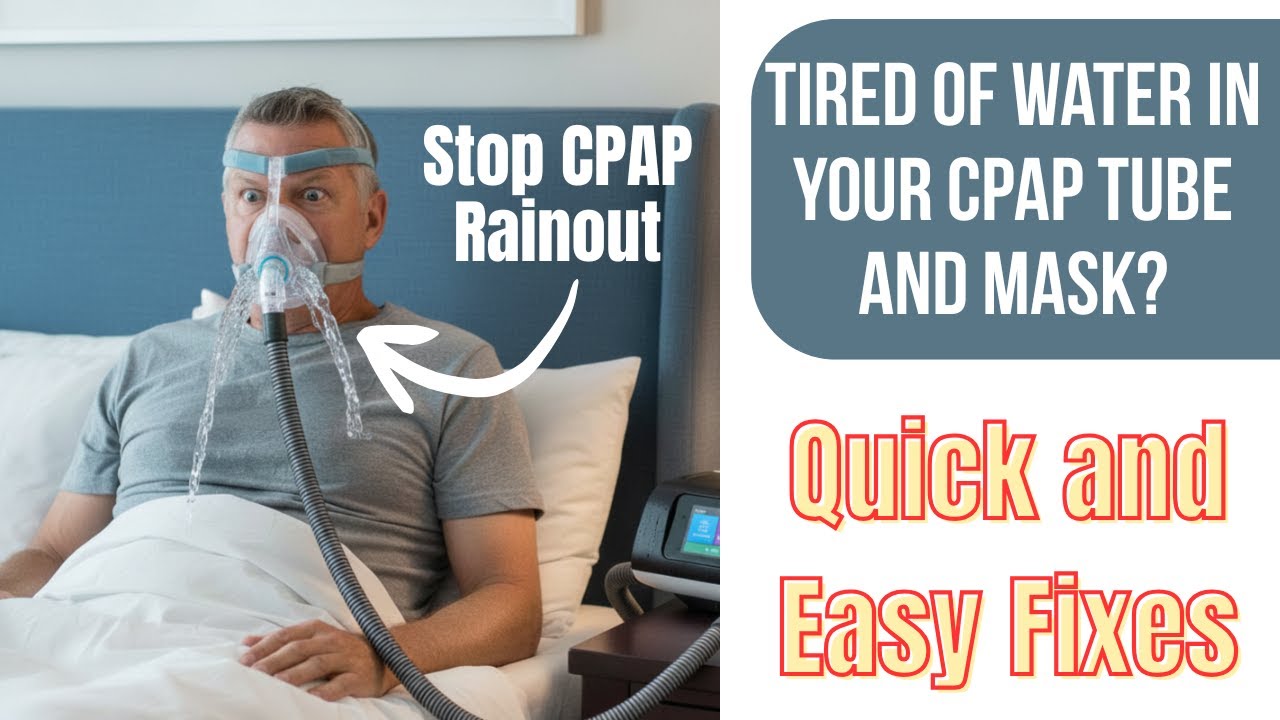
If you've been woken up by an irritating gurgling sound or felt water splash onto your face, you've experienced CPAP rainout. As someone who has helped customers with this exact issue for two decades, I can tell you that this frustrating problem. Rainout is the technical term for excess condensation gathering inside your CPAP tubing. Good news: it is entirely and easily fixable. The root cause is simple: Your machine’s heated humidifier adds warm moisture to the air. As this warm air travels, it cools down when it meets the room’s ambient air. When the temperature inside the tube drops too much, the moisture reaches its dew point, causing it to condense into liquid water droplets. Now that we understand why it happens, let's dive into the effective strategies I've perfected over the years to eliminate this issue for good.

Water in your CPAP Tube? - Quick fix for Condensation and Rainout - CPAPmyway

How to Stop Water in your CPAP Tube

3 Quick and Easy Solutions for CPAP Rainout

  1. Start Dry: Before using your machine the next night, ensure you begin with a dry CPAP tube. Either run your machine briefly without water in the reservoir until the hose is clear, or detach the tubing and hang it vertically (like over a door frame) until it's completely dry.
  2. Adjust Humidity: The fastest way to reduce condensation is to lower the amount of moisture. Reduce the humidity control setting on your CPAP machine. Less overall humidity in the air means less moisture is available to condense when the temperature drops. Typically adjusting the number down in your humidity setting control will accomplish this.
  3. Lower your CPAP Machine: When your CPAP machine sits lower than your head, gravity can help prevent water from flowing up the tube and into your mask.

Next-Level Permanent Solutions

  1. Insulate Your Tube: If lowering the humidity leaves your airways feeling too dry, try an insulating fabric CPAP tube cover (or tubing wrap). This sleeve acts like a thermal blanket, helping to keep the air inside the tube warm and preventing it from cooling down enough to hit the dew point. CPAP Tube Cover
  2. Upgrade to a Heated Tube: If your machine is compatible (like the AirSense 11 or Luna G3), heated CPAP tubing is the ultimate fix. The heated tube actively maintains a consistent, warm temperature throughout its entire length, eliminating the temperature drop that directly causes CPAP rainout and ensuring maximum comfort. Heated Tubing Options
  3. Adjusting your heated tube: Many heated tubes have an auto setting that works well, but if that doesn't work you can manually increase the tube setting to account for the rainout.
Water in your CPAP Tube? - Quick fix for Condensation and Rainout - CPAPmyway

Why Water in Your CPAP Poses a Serious Bacterial Risk

Resolving water buildup—often called "rainout"—in your CPAP tubing and mask isn't just about comfort; it's a critical health measure that directly impacts your respiratory well-being. The simple presence of moisture creates a highly undesirable, warm, and dark environment within your equipment—a perfect breeding ground for bacteria, mold, and fungi.

Here's why stagnant water poses a risk and why you must address it:

  • Optimal Growth Conditions: Your CPAP machine's humidifier delivers warm, moist air to prevent dryness. When this air cools in the tube (creating rainout), the resulting pooled water is at an ideal temperature for microbial growth. Bacteria and mold spores thrive in these damp, dark conditions.
  • Direct Inhalation Risk: Unlike germs on a doorknob, any microorganisms (like Pseudomonas or different types of mold) that colonize your wet mask or tubing are blown directly into your airways and lungs with every breath you take.
  • Potential for Respiratory Issues: Inhaling these contaminants can lead to respiratory irritation, sinus issues, and potentially more serious conditions like bronchitis, pneumonia, or fungal infections, especially in individuals with compromised immune systems or chronic lung conditions.
  • Musty Odors: A persistent musty or foul smell is often a clear indication of mold or bacteria growth, signaling that your equipment is no longer providing clean, therapeutic air.
Water in your CPAP Tube? - Quick fix for Condensation and Rainout - CPAPmyway

By diligently eliminating condensation and ensuring your equipment is completely dry after each use, you are removing the key ingredient for microbial growth. This step, combined with regular cleaning, is the single most important action you can take to ensure your CPAP therapy is safe, effective, and hygienic. Using a CPAP Cleaner or Cleaning Solution like those found in our CPAP Cleaning Section can be very helpful.

CPAP Cleaning Section

Search