


Hume Band 2.0 & Hume Body Pod Review: Two Weeks of Real-World Health Tracking (No Subscription Required)
By Clay RollysonA hands-on review from the CPAPmyway team — written after more than two weeks of wearing the Hume Band 2.0 around the clock and putting the Hume Body Pod through daily use at home.
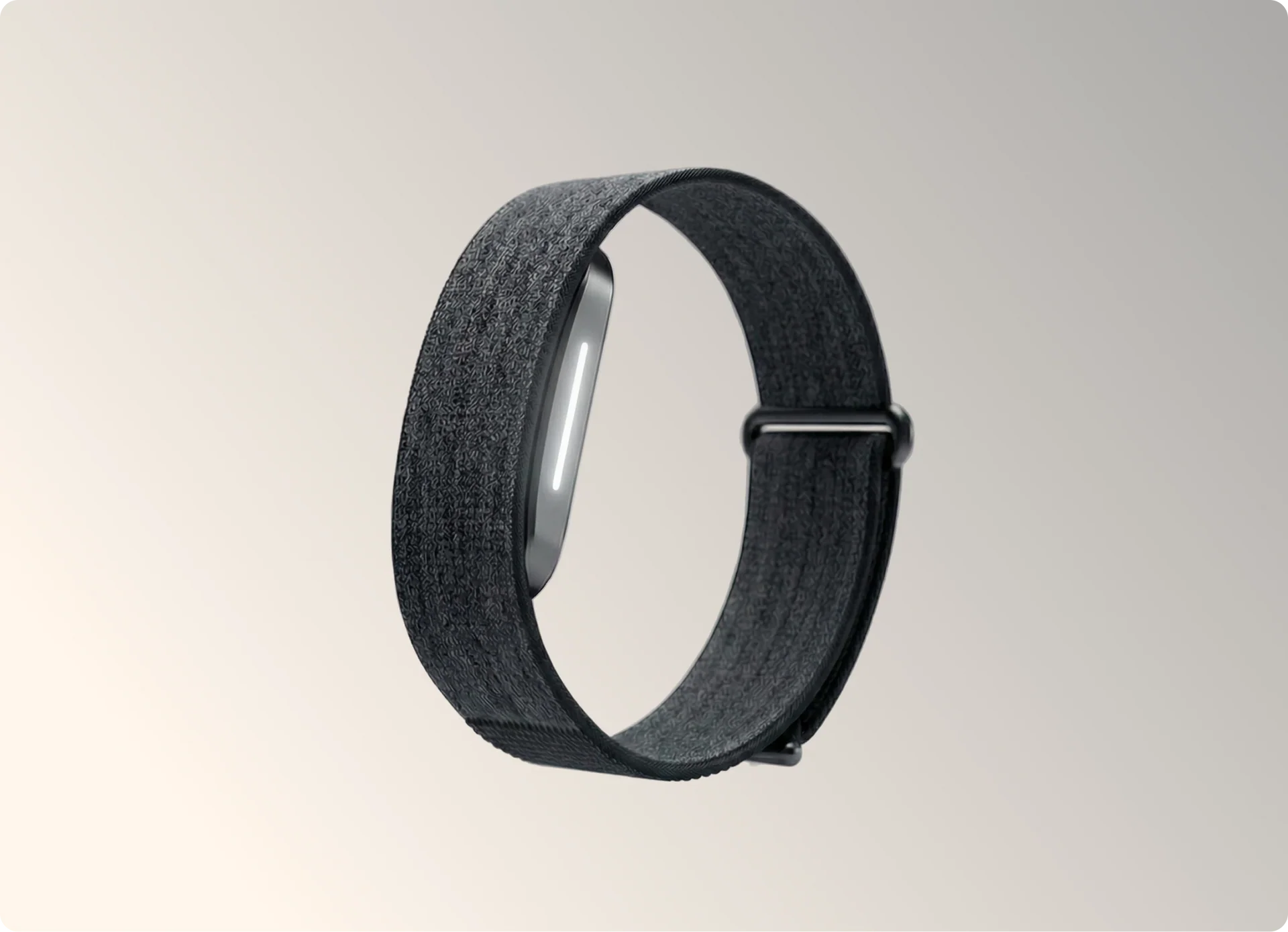
At CPAPmyway, we spend our days helping people sleep better and breathe easier, so when a wearable comes along claiming clinical-grade sleep tracking, continuous SpO2 monitoring, and even the ability to flag possible signs of sleep apnea, we don't just read the marketing page. We wear it. For the past two-plus weeks, I've had the Hume Band 2.0 on my wrist 24/7, and my wife Caitlin and I have both been using the Hume Body Pod smart scale as part of our daily routine. Here's our honest take — what impressed us, what surprised us, and who should consider adding them to their health toolkit.
What Are the Hume Band 2.0 and the Hume Body Pod?
The Hume Band 2.0 is a screenless, subscription-optional health tracker built around longevity rather than step counts. It continuously monitors heart rate, heart rate variability (HRV), blood oxygen (SpO2), skin temperature, sleep stages, stress, activity, and blood pressure trends — then translates all of it into metrics like Biological Age, Pace of Aging, and Metabolic Momentum inside the free Hume Health app. It carries an IP68 water-resistance rating, an UltraLux fabric strap, and up to 14 days of battery life.
The Hume Body Pod is its companion smart scale — but calling it a scale undersells it. Using 8-sensor bioelectrical impedance analysis (four sensors in the base, four in a retractable handle), it performs a true full-body segmental scan and reports 45 health metrics: body fat percentage, skeletal muscle mass, visceral fat, metabolic age, bone mineral content, hydration down to the cellular level, and independent readings for each arm, each leg, and your torso.
Together, they feed one app and one health picture — what's happening inside your body at night and during the day (the Band), and what your body is actually made of (the Pod).

Battery Life: The 14-Day Claim Holds Up
Hume advertises up to 14 days of battery life, and in our experience that's about right. In more than two weeks of continuous wear, I've charged the band exactly twice — both times just briefly while sitting at my desk — and it has never dropped below 35%. Battery status is displayed right at the top of the app, so there's no digging through menus to check it.
If you've ever owned a smartwatch that demands nightly charging, you know why this matters, especially for sleep tracking: a tracker that's on the charger overnight isn't tracking your sleep. With the Hume Band 2.0, there's simply no gap in the data.

Comfort: You Genuinely Forget It's There
Full disclosure: I don't wear jewelry beyond my wedding ring. I don't even like wearing a watch. So a 24/7 wearable was a hard sell for me personally — and after about one day, I completely forgot I was wearing it. The UltraLux fabric strap is soft, breathable, and there's no screen lighting up or buzzing at you. It just quietly collects data.
It's held up to real work, too. I put a new roof over my back porch last week in the middle of a Florida summer and wore the band the entire time. At one point it actually got a little concerned about me and suggested I take a water break. Fair enough — it was hot.

The Data: Overwhelming at First, Then Addictive
The first time you open the Hume app after a day or two of wear, the amount of information is honestly overwhelming. Heart rate, HRV, SpO2, skin temperature, stress, strain, recovery, sleep stages, blood pressure trends, biological age, metabolic momentum — it's a lot. But here's the thing: I am not a sit-down-and-study-the-numbers kind of person, and I've still found myself checking certain reports every single day with genuine interest. If you are a data person, you're going to love this thing.
What surprised me most was the accuracy. Even the blood pressure trend readings have landed almost exactly where my BP cuff puts them. (To be clear, Hume positions this as trend tracking, not a replacement for a clinical cuff — but the fact that it tracked so closely to mine built a lot of trust in the rest of the data.)
And then there's the fun stuff. I'm 40 years old, and according to the Hume app my metabolic age is 30, progressing at just 0.1 years per actual year. Is that a precise medical measurement? No. Is it motivating to watch, and does it respond to how you sleep, move, and manage stress? Absolutely.

Sleep Tracking: The Reason CPAP Users Should Pay Attention
This is where the Hume Band 2.0 earned its spot on our shelves. The sleep data has been remarkably accurate for me — my initial sleep time, my wake-ups during the night, and my morning wake time have all been spot on. It even caught the nap I snuck in during a week at my daughters' national dance finals, when I quietly hid from my family to squeeze one in. (If you know competition dance, you know sleep isn't in the cards that week. My sleep scores took the hit to prove it.)
For the sleep apnea community, the interesting part is what the band does with your overnight SpO2 and heart rate data. Because it monitors blood oxygen continuously through the night, it can flag patterns — repeated SpO2 dips paired with unusual heart rate fluctuations — that may be consistent with sleep apnea.

Two important points here. First, the Hume Band is not a diagnostic device — an alert like this is a signal to get properly tested, not a diagnosis. Second, for people already on CPAP therapy, this same capability works in reverse: it becomes a nightly report card on how well your therapy is performing. Your CPAP machine reports mechanical data like pressure and leak rates; the band shows you how your body actually responded — whether your oxygen stayed stable, whether your sleep stayed consolidated, and whether your deep and REM sleep are recovering. If a mask leak or a pressure issue is fragmenting your sleep, it will show up in your Hume dashboard.
I'm planning to wear the Hume Band 2.0 alongside a home sleep apnea test in the next few weeks to compare the two side by side, and I'll update this review with the results.

Stress Tracking: The Sleeper Feature
Honestly, the stress data has been the most eye-opening part for me. As a business owner, father, and husband, stress is a real thing, and seeing when my body is and isn't stressed has been fascinating. The best example came from Caitlin: she stopped to visit a friend for 30 minutes the other day, and while she was sitting and talking, the band recorded her lowest stress score of the entire day. Her takeaway? Do that more often. That's the kind of small, concrete insight that actually changes behavior.
The Hume Body Pod: The Scale That Explains the Scale
The information from the Body Pod is, frankly, nuts — in the best way. Instead of one number that lumps fat, muscle, and water together, it breaks your weight down into what it's actually made of: fat mass, skeletal muscle mass, visceral fat, protein, bone mineral content, and hydration at the intracellular and extracellular level. Because the retractable handle routes the signal through your arms and torso (not just up one leg and down the other like a standard four-sensor scale), it measures each arm, each leg, and your trunk independently.
Caitlin has used the Pod even more than I have, and she's been genuinely impressed. A week where your weight doesn't move but your muscle mass ticks up and your fat mass ticks down looks like failure on a normal scale — and looks like progress on this one.
One more note for a growing group of our customers: if you're on a GLP-1 medication or any medically supervised weight-loss program, this kind of tracking matters more than usual. Rapid weight loss can take a significant amount of lean muscle with it, and the Body Pod lets you watch your skeletal muscle mass directly, so you can confirm the weight you're losing is fat — not the muscle you need to keep it off.

Connection, App, and Your Data
Connectivity has been literally flawless — not a single dropped sync or pairing issue on either the band or the scale in over two weeks. Both devices pair through the free Hume Health app over Bluetooth Low Energy and sync automatically in the background on iOS and Android.
- No subscription required. All core metrics — sleep stages, SpO2, HRV, biological age, stress, activity, and more — are included in the free Hume Health app with purchase. A genuine differentiator against WHOOP (~$30/month) or the Oura Ring (device plus monthly fee). An optional premium tier (from $8.99/month) adds AI coaching.
- Your data is portable. Connect to Apple Health on iPhone or Google Fit on Android. Export your full data as an XML file in about a minute. Hume also supports linking your data with your doctor's office.
- Apple Health and Google Fit integration. Seeing the same data summarized in a familiar health app is arguably even more useful for a quick daily check.

Quick Specs at a Glance
| Feature | Hume Band 2.0 | Hume Body Pod |
|---|---|---|
| Price | $249 — shop at CPAPmyway | $229 — shop at CPAPmyway |
| Key tracking | HR, HRV, SpO2, skin temp, sleep stages, stress, activity, blood pressure trends, biological age | 45 metrics: body fat, skeletal muscle, visceral fat, metabolic age, bone, hydration, segmental analysis |
| Technology | 5 LEDs + 4 photodiodes optical sensor array | 8-sensor bioelectrical impedance (BIA) with retractable handle |
| Battery | Up to 14 days per charge (~1.5 hr full charge) | Rechargeable Li-ion via USB |
| Durability | IP68 — shower and swim safe | Home use |
| Subscription | None required — free Hume Health app; optional premium from $8.99/mo | |
| HSA/FSA | Both devices are HSA/FSA eligible | |
| Warranty | 1-year manufacturer warranty included | |
Our Verdict: This Is Where Wearables Are Headed
After two-plus weeks, my honest conclusion is simple: this is the future. Wearables with this depth of information are going to keep people out of hospitals and help doctors keep their patients healthier, because there's no hiding from the data. Your habits show up in the numbers, good or bad — and once you can see them, you start changing them.
The Hume Band 2.0 is a great fit if you: want serious sleep, recovery, and longevity data without a monthly fee; are on CPAP therapy and want nightly insight into how well it's working; suspect you may have a sleep issue worth investigating; or simply hate charging a smartwatch every night.
The Hume Body Pod is a great fit if you: are working on body composition rather than just weight; are on a GLP-1 or medical weight-loss program and need to protect muscle mass; or want lab-style segmental analysis at home for a fraction of the cost of clinical scans.
Ready to see your own data?
👉 Shop the Hume Band 2.0 at CPAPmyway — $249, no subscription required
👉 Shop the Hume Body Pod 8-Sensor Smart Scale at CPAPmyway — $229
Both ship fast and free on orders over $49, both are HSA/FSA eligible, and our live U.S.-based team is a phone call away at 844-289-4789 if you have questions.
Frequently Asked Questions
Disclaimer: The Hume Band 2.0 and Hume Body Pod are wellness devices, not medical devices. Metrics such as blood pressure trends, biological age, and sleep apnea indicators are informational and are not a substitute for professional medical diagnosis or treatment. If you suspect you have sleep apnea or another health condition, consult a qualified healthcare provider.


