


How to Choose the Right CPAP Mask in 2026
By Clay RollysonBy Clay Rollyson, CPAPmyway
Hey guys, it's Clay from CPAPmyway.com. In our front lobby, we have a shelf where customers come in to try on and pick out masks — and honestly, even two full shelves can't come close to holding everything on the market. There are something like 200 different CPAP masks out there. That's overwhelming for anybody.
So in this guide, I want to help you narrow that 200 down to the one, two, or three masks that actually fit what you're looking to get out of CPAP therapy — based on your comfort preferences, your pressure, how you sleep, and how you breathe.
The Three Main Types of CPAP Masks
Every CPAP mask funnels up into one of three main categories:
- Nasal Pillow Masks – Two little nostril buds that rest right at the opening of your nostrils. The most minimal style out there.
- Nasal Masks – These surround the nose and disperse pressure really well. This category has a sidebar: the nasal cradle, which seals underneath the nose instead of over it.
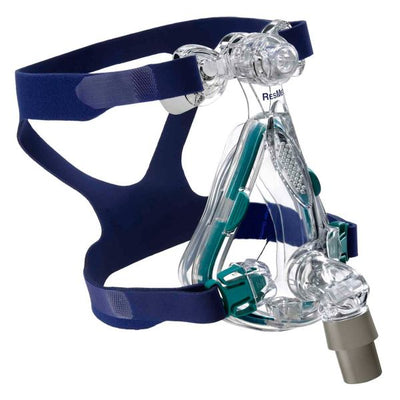
- Full Face Masks – These go over the mouth and nose. Built for mouth breathers or anyone who just wants to put something on, keep it stable, and get the job done. These also come in a traditional over-the-nose version and a cradle-style version that seals under the nose.
On our website you'll actually see these broken into five collections — Nasal Pillow, Traditional Nasal, Nasal Cradle, Minimal Full Face, and Traditional Full Face — but they all roll back up to those three main types.
Let's dig into each one.
Section 1: Nasal Pillow Masks
Nasal pillows fit just into the nostrils, making them the most minimal style of mask available. These are really good for people who:
- Don't want a lot on their face
- Have a claustrophobic reaction when they put a mask on
- Are on lower pressures
- Are not mouth breathers
- Want to avoid lines and marks on the face in the morning (a big reason a lot of our ladies start here)
I've got four recommendations in this category.
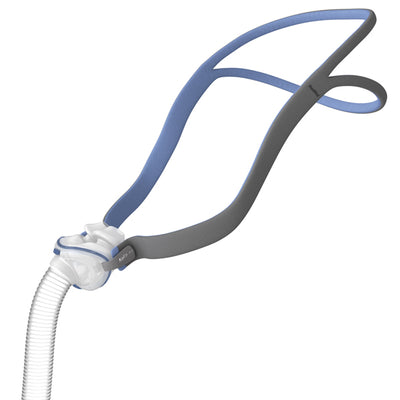
ResMed AirFit P10
The AirFit P10 puts very, very little on your face — just two thin straps running up the sides and a split crown on the back. There aren't a lot of adjustments (just one side), it's really soft, super minimal, and it seals really well thanks to the dual-wall pillows. A little stretch tube allows for decent side-to-side movement.
It's also one of the quietest masks we sell. The woven QuietAir vent breaks up your exhaled air instead of blasting it across the bed, which your partner will appreciate. If you're not sure on sizing, grab the FitPack — it comes with small, medium, and large pillows so you can find your fit at home instead of guessing.
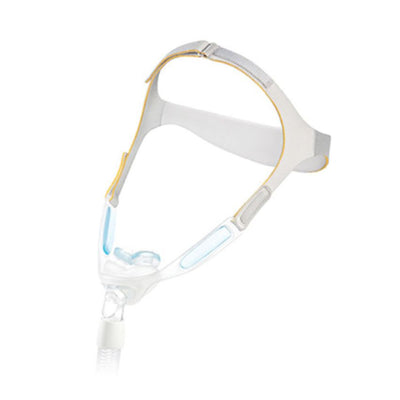
Philips Respironics Nuance Pro
The Nuance Pro is very unique — it has gel-filled nostril buds instead of silicone. It seals really, really well. If you've tried the P10 or another silicone option and ended up with irritation on the tip of your nostrils, you'll definitely want to give the gel version a run. They actually pulled this mask from the market a while back, but relaunched it because people wanted it back so badly.
The gel does something silicone just can't: it conforms to the shape of your nostrils instead of pressing against them, so the seal feels softer and more forgiving all night. It's a great pick if you love the minimal pillow concept but your nose has been telling you otherwise.
One note on both the P10 and the Nuance Pro: these are great for people who don't sleep on their side or face down as much. Both have a bit sticking out in front of the nose, so as you push your face into the pillow, it can pull the buds out of your nose.
Philips Respironics DreamWear Silicone Pillow
That's where the DreamWear Silicone Pillow Mask comes in. It has the same style of nostril pieces, but with a top-of-the-head tube connection and a really low profile. It has exhalation ports on the top as well as the front, so you could literally sleep face down on this mask without any issues.
The other thing people love about the DreamWear frame is the open field of vision — nothing in front of your eyes, so you can read or watch TV before you doze off. And the frame is shared across the whole DreamWear family, so if you ever want to try the nasal cradle cushion instead of the pillows, you can swap cushions without buying a whole new mask.

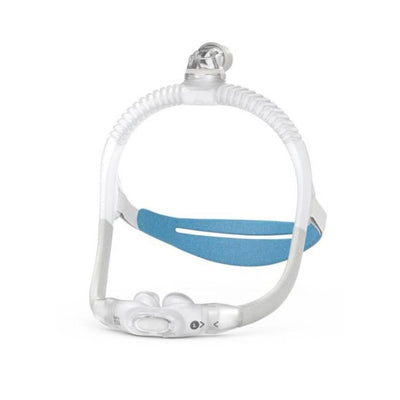
ResMed AirFit P30i
The AirFit P30i works the same way — top-of-the-head tube connection, super low profile, and the freedom to roll onto your side or even go face down in the bed. If you love the pillow feel but move around a lot at night, the P30i and the DreamWear pillow are the two you want to look at.
Like the P10, it uses ResMed's QuietAir venting, so it stays whisper-quiet through the night. The frame comes in a couple of sizes and the tube swivels at the crown, meaning you can toss, turn, and drag that hose all over the bed without ever feeling it tug at your nose.
Section 2: Nasal Masks
I break the nasal category into two subcategories: the traditional nasal, which goes over the bridge of the nose (kind of a clown-nose style), and the nasal cradle, which rests as a full cradle underneath the nose — not pillows in the nostrils, but a seal under the nose.
Nasal masks are typically for people who need a little more stability. If you've had trouble keeping a nasal pillow mask on — you toss and turn, you rub your head, and it slips off — a nasal mask is going to stay on all night.
The other big reason to go nasal: exhalation. With nasal pillows, all of your air is going in and out through two little holes. It can feel like you're exhaling through a jet stream. A nasal mask lets you exhale into a larger volume, which makes it much easier and changes the whole feel of your breathing.
My Traditional Nasal Picks
Fisher & Paykel Nova Nasal – The Nova Nasal gives you the option of clipping the tube at the top of the head or running it out the front. It has a super quiet diffuser and a really nice cushion that seals well without having to tighten much at all — in fact, it's designed so you shouldn't over-tighten it. The RollFit-style cushion actually rolls along the bridge of your nose as you move, so it self-adjusts instead of digging in. If you're new to it, grab the FitPack version — it ships with all three cushion sizes so you can dial in your fit the first night.
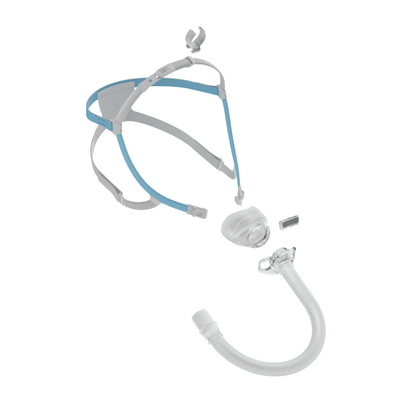
ResMed AirFit N20 / AirTouch N20 – The AirFit N20 is a longtime favorite. It doesn't have the top-of-the-head tube flexibility of the Nova, but it has the ability to switch between a foam or silicone cushion (the foam version is called the AirTouch N20), so you get versatility in the feel you want on your face. The N20 also fits a huge range of face shapes — it's one of those masks we can put on almost anybody and get a seal — and the quick-release elbow means you can pop off the hose for a middle-of-the-night trip without pulling the whole mask off your head.
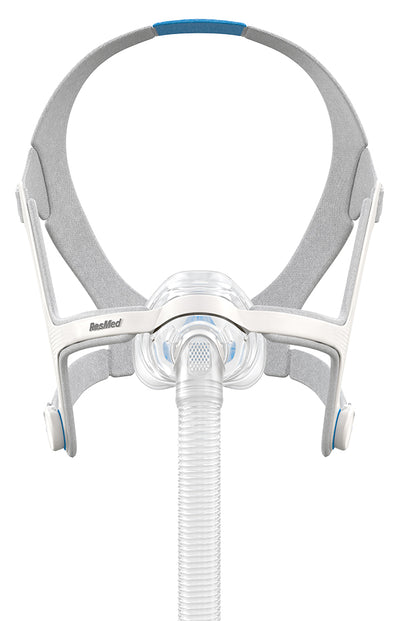
Both of these give you a really nice fit with a ton of cushion on the bridge of the nose, easier exhalation than the pillows, and still not a whole lot on the front of your face.
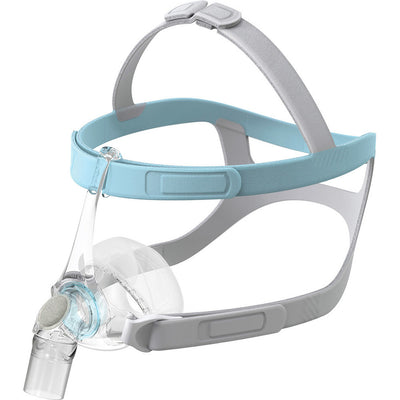
Also worth a look in the traditional category is the Fisher & Paykel Eson 2 — a very traditional over-the-nose fit that's stable and comfortable.
Like the Nova, it uses Fisher & Paykel's RollFit seal, which rolls back and forth on the bridge of the nose to take the pressure off that sore spot where a lot of nasal masks dig in. It's a simple mask to live with, too — just a few parts, easy to take apart and clean, and a washable diffuser that keeps the exhalation nice and quiet. If you want a no-drama, old-reliable nasal mask, this is it.
My Nasal Cradle Picks
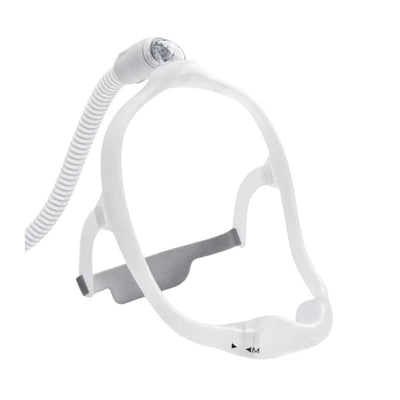
Philips Respironics DreamWear Nasal – The DreamWear Nasal seals underneath the nose rather than in the nostrils. (Quick fitting lesson: it's easy to put this cushion on backwards — always match arrow to arrow!) The cradle gives you some reprieve on exhalation compared to pillows, gets rid of the sore-nostril issue that some people have with pillow masks, disperses pressure really nicely, and lets you sleep on your face or your side. Lots of versatility of movement.
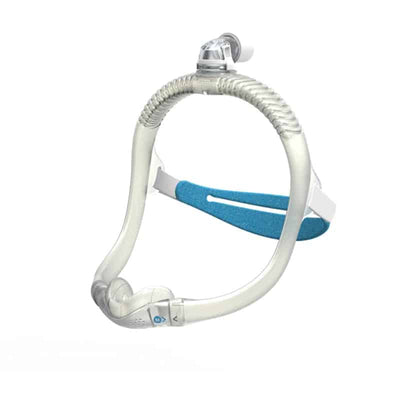
ResMed AirFit N30i – The AirFit N30i is super similar to the DreamWear Nasal, with one difference: a little bridge membrane on the cushion itself that's supposed to provide more stability. Some people like it, some people hate it, but it's a very similar fit overall.
You get the same top-of-the-head tube connection as the DreamWear, so side sleeping and rolling around are no problem, and there's a FitPack option here too if you want to test cushion sizes at home. Between the two, it honestly comes down to how that little bridge membrane feels on your nose — which is exactly the kind of thing our 30-day guarantee is for.
Section 3: Full Face Masks
Full face masks are typically designed for mouth breathers. If you've tried a nasal mask and the air comes in your nose and out your mouth, you know the result — your mouth is dry as the Sahara Desert when you wake up. It's a very common issue.
Some people recommend a chin strap for that. I'm not a huge fan. I point people directly to a full face mask instead, so you get the full humidity your CPAP is adding in both your mouth and your nose, and you get a more relaxed breathing feel. I'm a mouth breather myself — there's no way I could wear a nasal mask and feel comfortable at night.
Just like the nasal category, full face has two subsections: minimal contact full face masks that seal under the nose, and traditional full face masks that seal over the nose and mouth. Here are my four recommendations (plus one Hail Mary).
ResMed AirFit F40 (Minimal Contact)
The AirFit F40 is a really cool minimal contact style — it seals under the nose and over the mouth with a front-facing tube. It's ideal for back sleepers who move side to side a little. It has a very stable fit and super quiet exhalation. Because there's no top-of-head tube, you also get really thin straps — a big deal if you don't want indentations on your face in the morning.
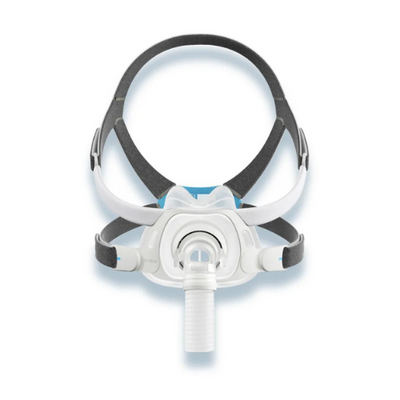
ResMed AirFit F30i (Minimal Contact, Top-of-Head Tube)
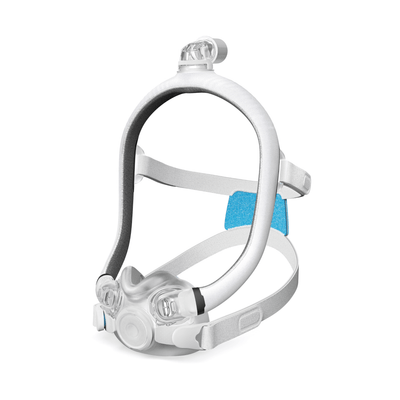
The AirFit F30i has a very similar cushion to the F40, but with the top-of-the-head tube connection. This is for people who want to roll to their face or deep onto their side into the pillow. It has exhalation at the top of the head as well as the front of the mask, which gives you a lot more versatility in your sleep position. There's a bit more bulk since the air flows down through the frame tubes, but it leaves very little on the front of the face — a really low profile.
Bonus: if silicone bothers your skin, there's a fabric-lined version of this mask — the AirTouch F30i Clear and the fully fabric-wrapped AirTouch F30i Comfort. More on that in the section for women below.
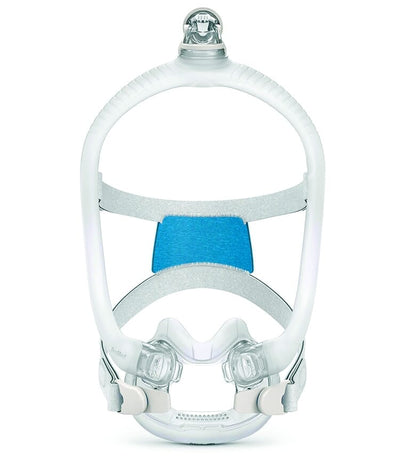
Fisher & Paykel Vitera (Traditional)
The Vitera is our go-to for people who just want to get the job done. Four points of headgear, breathe through your mouth and nose, and it does a great job of sealing without a whole lot of pressure. It's definitely more on the face — but that's the trade for the stability.
Two little details make the Vitera easier to live with than most traditional full face masks: the breathable VentiCool headgear keeps the back of your head from getting sweaty, and the cushion is built to flex with your jaw as it drops during the night — which is exactly when most full face masks spring a leak. It handles higher pressures without complaint, too.
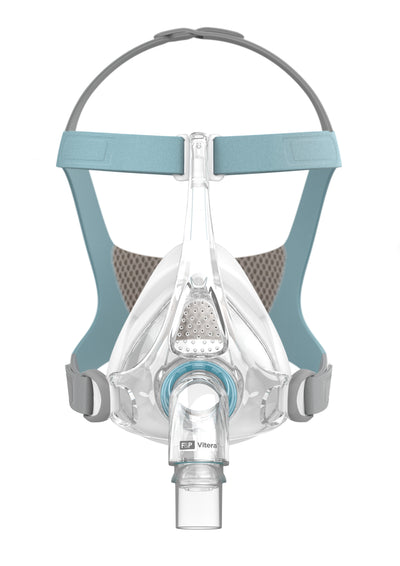
ResMed AirFit F20 (Traditional)
The AirFit F20 is honestly for the same customer as the Vitera. The main difference is the F20 has no forehead piece. If you want a bit more clear line of sight but still want the over-the-nose seal, go F20. If you want the stability of a full face with all four points, go Vitera.
The F20's InfinitySeal cushion is very forgiving — it adapts to a wide range of face shapes and pressures, which is why it's been one of the best-selling full face masks on the market for years. The magnetic headgear clips are a nice touch too: snap it off in two seconds at 2 a.m. and snap it right back on without re-fitting anything. And like most of our top picks, it comes in a For Her version with smaller headgear.
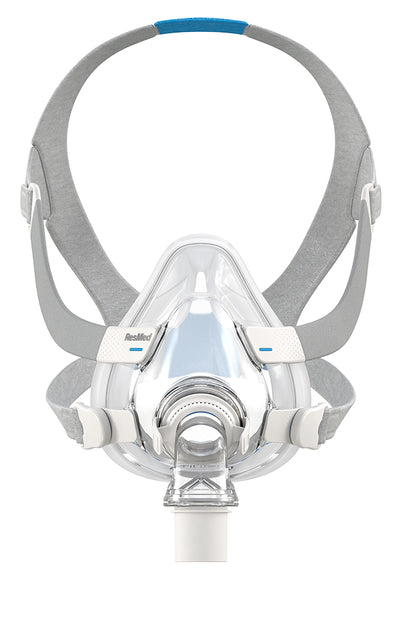
The Hail Mary: ResMed Mirage Quattro
I have to include the Mirage Quattro while ResMed is still making it. It's definitely a bulkier, more old-fashioned option — it's got dials and clips and all sorts of things the newer masks have done away with. But here's the funny thing: they can't get rid of it. ResMed would love to discontinue this mask — it has too many parts and it's expensive to make — but man, does it seal well.
If you're on a higher pressure (which full face masks are typically better for anyway, since they disperse pressure on exhalation better) and you can't get any other mask to seal, the Mirage Quattro is our Hail Mary. Hard plastic frame, really tacky silicone, super stable and secure. It's a bit old-fashioned and a little expensive — but if it's what works, it's what works.
What's the Best CPAP Mask for Women?
This is one of the questions I get the most. The same principles apply, but we do know that ladies typically have different preferences than men.
Most of our ladies want to start with something simple and petite like the AirFit P10 — and most of the masks in this guide come in a “For Her” version with smaller headgear designed for a more petite head. With a mask like the P10, there's very little on the face, so there's not a lot of issue with lines in the morning.
But I'll be honest with you: my wife uses a CPAP every night, and she started with a pillow mask, went to a nasal, and ended up on a full face. She used the Vitera for years with a ton of success — you put it on and it works. Over time she got tired of the bulk on her face, and she switched to the fabric AirTouch version of the F30i. Instead of silicone, it has a fabric lining that's better for her skin, it gets the tubing out of her face, and it lets her sleep more on her side.
The truth is, women are as diverse as men on this. Most women want to start with the more petite masks — and we welcome that. With our 30-day guarantee, you can try one, and if it doesn't work, we can always shift you to something a little larger.
What's the Best CPAP Mask for Beards?
Beards are super fashionable (I wish I could grow one — I have some of the worst facial hair on the planet). But for my buddies growing a full beard, you've got options.
If you're NOT a mouth breather: Go with a traditional nasal like the Eson 2 or the AirFit N20. A traditional nasal handles the higher pressures a lot of guys are on without exhalation issues, and it completely avoids sealing over the area where that big beautiful beard grows. Nasal pillows are also worth trying, but as pressure escalates, pillows can get a little more difficult to deal with.
If you're a mouth breather with a beard: My first recommendation is the Vitera — my buddy Bubba uses this one. It's a really stable mask that gives you the ability to crank down if you need to without putting a ton of pressure on the face. With a beard, you're going to have to snug things down to close the gaps between the hair, and silicone lets you do that.
I've had a lot of people try the foam and fabric cushion versions with a beard, and it's honestly been a 50/50 split — some are surprised at how well it works, and some can't get a seal at all.
And when all else fails: the Mirage Quattro. This mask will buckle down to just about anything. It doesn't matter how lush and beautiful your beard is — you can crank this thing down (it even has a dial) and get a proper seal.
How Do I Try a New Mask?
There are two kinds of people asking this question: first-time users and people who hate their current mask. (We get a lot of both — mainly the latter!)
If you hate your current mask: We have a 30-day guarantee, so there's basically no risk. Try something from this guide. If you hate it, call us up, say “hey, give me my old mask back,” and we'll send you the old mask. Go with a company that gives you the opportunity to try something without the risk of being stuck with it. There's really no reason not to.
If you're a first-timer: You've got to start somewhere. If you just cannot fathom something on your face, start with something small like a nasal pillow mask. If you find out you're a mouth breather, no problem — with our 30-day guarantee, we just swap you to the next best option based on your feedback.
Either way, you want to be working with a good company that will actually take your call, listen to you, and figure something else out with you. We'd like to believe we do a pretty good job of that.
Help Everybody Else Out
As you go through this, we'd love your feedback. If you feel like I missed something, or you've found an awesome mask that works really great for you, throw it in the comments — it helps everyone reading this figure out what might be best for them. What masks have you tried? Do you have a giant full beard? What worked and what didn't?
And as always, thanks for reading. If you have questions or want help picking your next mask, give us a call at 844-289-4789 or browse all of our CPAP mask options at CPAPmyway.com.


