


Why isn't my CPAP using water?
By Clay RollysonShort answer: If your CPAP water chamber is still full in the morning, your machine is most likely working exactly as designed. Modern CPAPs read your room's temperature and humidity and hold back moisture when the room is already humid, or when the room is so cool that extra moisture would condense in the hose (rainout). If you wake up feeling fine, nothing is wrong. If you wake up dry and turning up the humidity doesn't help, a heated tube is the fix.
My wife asked me this exact question not long ago: "Why isn't my CPAP using water anymore?" She'd pull her humidifier chamber out in the morning and find the water level hadn't moved at all. It's also one of the questions we get most often on the phones and in the comments on our YouTube channel. It tends to show up when the seasons change, and in almost every case, the machine is fine.
Here's what's actually going on, how to tell whether your humidifier has a real problem, and what to do if you're waking up dry.
Table of contents

Why isn't my CPAP using water?
Most modern CPAP machines have built-in sensors that constantly monitor the temperature and humidity in your bedroom. The machine does this to avoid rainout, which is condensation that forms when the CPAP adds more moisture than the air in your hose can hold. When that happens, you literally get water droplets inside your tubing and sometimes in your mask.
To prevent rainout, your CPAP limits how much water it evaporates based on your room:
- Your room is already humid. If there's plenty of moisture in the air, the machine has little room to add more, so it doesn't. Your chamber stays full.
- Your room is cool. Cold air can't hold as much moisture. With a standard hose, humid air traveling from the machine to your mask would cool down and condense, so the CPAP holds back.
That's why this often starts when the weather changes. A humid summer or a cold snap can both lead to a chamber that looks untouched in the morning.
The first question: how do you feel?
Whenever someone calls us worried that their CPAP isn't using water, the first thing I ask is: how are you feeling when you wake up?
Are you waking up with a dry mouth, dry nose, sore throat, or congestion? Almost always the answer is, "No, I feel fine." If that's you, there's no problem to fix. The water level is just a side effect of your room conditions, not a sign your therapy isn't working.
How to tell if the humidifier is actually broken
If your humidifier genuinely fails, you'll usually know. Almost all modern CPAPs will alert you with a beep, a flashing light, or a message on the screen such as "humidifier malfunction." On some newer machines, like the ResMed AirSense 11, you can also check your sleep report to see whether the humidifier is functioning correctly.
No alert, no dryness? Your machine is almost certainly working fine.

5 quick things to check
If you are waking up dry, run through these before assuming anything is broken:
- Humidity setting. Make sure the humidifier isn't turned off or set very low. Try raising it a step or two in your comfort or patient menu. (See our guides to adjusting humidity on the AirSense 11 and adjusting the Luna G3 humidifier.)
- Chamber seated correctly. Remove and reinstall the water chamber and make sure the lid and seals close fully. A loose chamber can leak air and reduce humidification.
- Heated tube recognized. If you already use a heated tube, confirm it's firmly connected and that your machine shows the heated-tube settings.
- Mask leaks. A leaking mask, especially mouth leak with a nasal mask, can dry you out no matter how much water the machine uses.
- Room conditions. A very cold bedroom is the most common reason the machine holds back. A slightly warmer room lets it add more moisture.
Still waking up dry? Add a heated tube
If you've turned your humidity all the way up and you're still waking up dry, your CPAP is most likely capping humidity because of your room conditions. With a standard hose, there's only so much it can safely add.
The solution is a heated tube. A heated tube keeps the air warm all the way from the machine to your mask, so the moisture stays in the air instead of raining out in the hose. That lets your CPAP add a lot more humidity, and your room's temperature and humidity stop being the limiting factor. Once it's connected, you can raise your humidity to a comfortable level without worrying about rainout.
Almost every modern home CPAP has a matching heated tube. ResMed calls theirs ClimateLineAir, Philips Respironics makes one for the DreamStation, and 3B/React Health makes one for the Luna G3. Pick the one made for your machine:
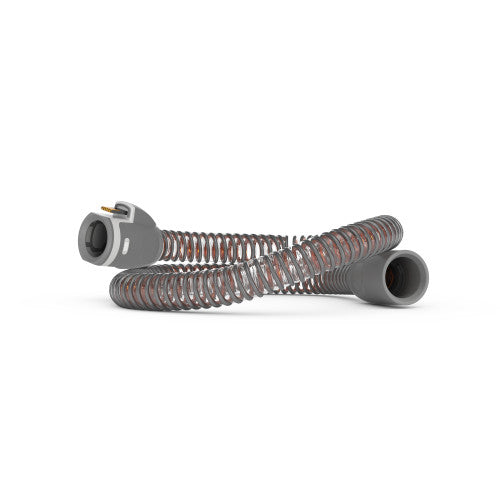
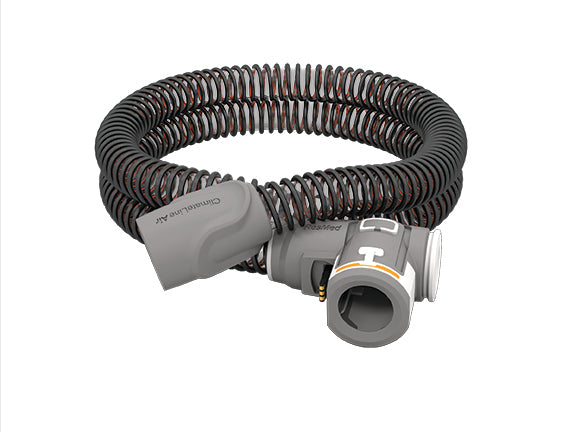


Not sure which tube fits your machine? Browse all CPAP tubing or call us at 844-289-4789 and we'll match it for you. If you're already seeing water in your hose, our guide to fixing condensation and rainout walks through it step by step.
Humidifier care tips
- Empty the chamber every day. Even if your CPAP didn't use any water, dump it out each morning and let the chamber air dry. Stagnant water is where mold, mildew, and bacteria start.
- Use distilled water. Tap and well water leave minerals behind as they evaporate. That buildup can damage your chamber and gives germs a place to grow.
- Wash the chamber at least weekly. Of everything on your CPAP, the water chamber is the part most likely to make you sick if it's neglected. Warm water and mild soap once a week keeps it from turning into a pond. A CPAP cleaning kit makes the routine easier.
When to replace your water chamber
How long a water chamber lasts depends almost entirely on how well it's cared for. Emptied daily, washed weekly, and filled with distilled water, a chamber can last a long time. Tap water, well water, and skipped cleanings wear one out much faster.
Signs it's time for a new water chamber
- Leaks, or water on your nightstand in the morning
- Mineral buildup or white scale inside the tank
- Mold or mildew you can't clean away
- Air leaking from worn silicone seals
- Cloudiness or significant discoloration
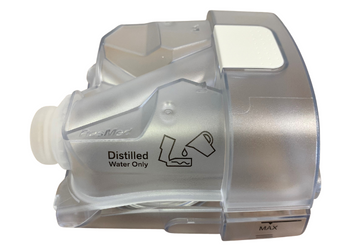
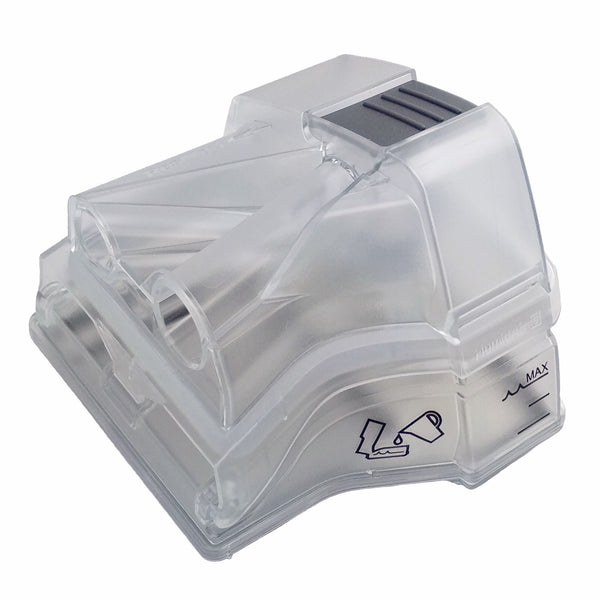


See every option in our water chamber collection.
Frequently asked questions
Is it normal for my CPAP to not use any water?
Yes. If your room is already humid or fairly cool, your CPAP will limit how much water it evaporates to prevent condensation in the hose. As long as you wake up without dryness and your machine isn't showing an error, it's working normally.
How do I know if my CPAP humidifier is broken?
Most modern CPAPs alert you when the humidifier fails, with a beep, a light, or a "humidifier malfunction" message. Some newer models, like the ResMed AirSense 11, also show humidifier status in the sleep report. No alert and no dryness usually means no problem.
How much water should my CPAP use each night?
There's no single right amount. Water use depends on your humidity setting, your pressure, how many hours you sleep, whether you use a heated tube, and your bedroom's temperature and humidity. It's normal for usage to change from season to season, and even night to night.
Why did my CPAP suddenly stop using water?
A sudden change usually lines up with a change in your room, such as warmer, more humid weather or a colder bedroom. It can also happen if your humidity setting was lowered or the chamber isn't seated properly. Check your settings and the chamber fit first.
Will a heated tube make my CPAP use more water?
Usually, yes. A heated tube keeps the air warm all the way to your mask, which lets your CPAP add much more humidity without rainout. That means more comfort if you've been waking up dry, and more water used overnight.
Do I still need to empty the chamber if the water level didn't change?
Yes. Empty and air dry your water chamber every morning, even if it looks full. Water sitting in the chamber all day is an ideal place for bacteria and mold to grow.
Can I use tap water in my CPAP humidifier?
Distilled water is best. Tap water leaves mineral deposits behind as it evaporates, which can damage your chamber and shorten its life.
Still not sure what's going on with your CPAP?
Our CPAP experts talk people through humidifier questions every day. Call us at 844-289-4789 and we'll help you figure it out, usually in just a few minutes.
Shop heated tubing Shop water chambers


